How Does Melatonin Help You Sleep?
Winter is winding down, and the days are stretching out, so you might expect your energy to bounce back right away. But for many, our bodies are stubborn spring - brain fog, low motivation, and tiredness that just won’t budge.
This mismatch is completely normal. Your brain, hormones, and body clock need time, and the right signals, to shake off winter mode. Light, sleep, movement, and food all shape how your brain fires and how energised you feel.
The good news? Simple habits can help you reset. By tweaking your light, movement, sleep, and nutrition around the spring equinox, when day and night are in perfect balance, you give your brain a clear signal to reboot. Your energy can rise with the returning light.
Why Winter Leaves Us Feeling Drained
Light is the main driver behind that seasonal slump. Your body is wired for blazing days and deep, dark nights. Light acts as the master switch for your internal clock, setting the rhythm for sleep, hormones, and energy.
Specialised light-sensitive cells in the retina send signals to the brain’s suprachiasmatic nucleus (SCN), a tiny cluster of neurons in the hypothalamus that acts as the body’s master clock. This clock then communicates with other brain regions and organs, helping to time key hormones, including:
Melatonin: which promotes sleep and tells your body it is night
Cortisol: which drives morning alertness, focus, and energy
A key player in this system is the pineal gland, which is essentially your brain’s darkness sensor and night-signal broadcaster. Its job? Turning changes in light into hormonal messages that tell your whole body what “time” it is.
How Light Information Reaches the Pineal Gland
When light hits your eyes, it serves a purpose beyond vision. A special set of light-sensitive cells in the retina sends information down a dedicated pathway, the retinohypothalamic tract, directly to the SCN. The SCN then passes this timing signal through a multi-step chain involving the paraventricular nucleus, the spinal cord, and the superior cervical ganglion before it reaches the pineal gland, which sits deep in the brain and has a pine-cone-like shape.
This is how light at your eyes turns into hormonal signals from the pineal gland. In other words, what you see in the morning and evening directly shapes what your body thinks is “day” or “night.”
What the Pineal Gland Actually Does
The pineal gland converts the amino acid tryptophan into melatonin, the hormone that encodes “night” for the rest of your body.
When it’s dark, nerve signals trigger the pineal gland to make melatonin. In light, that signal stops, so melatonin drops. Melatonin stays low during the day and rises at night, acting like a chemical clock hand that tells your body how long the night lasts.
Melatonin does more than just control sleep. It shapes when you fall asleep, your body temperature, metabolism, and even parts of your immune system. If your light exposure is off, it sends ripples through your whole body, not just your bedtime.

Why Does Winter and Evening Screen Time Disrupt The Body Clock?
In winter, less morning sunlight and more evening screen time delay your body clock. Mixed signals and low contrast between day and night mean your pineal gland gets a blurry cue for melatonin production.
The result? Shallow, broken sleep. Groggy mornings. That all-day tiredness that just won’t quit.
Studies show that even regular room light in the late evening can delay melatonin and shorten its nightly rise. It also reduces pre-sleep melatonin compared to dim light. Bright or blue light from screens has a stronger effect. So your brain can still get a daytime signal after the sun has set.
Other winter habits add up: moving less, staying indoors, and reaching for comfort foods mean less oxygen to your brain and more cravings or endless scrolling, slowing motivation. You end up tired but wired, sleepy by day, restless at night, with a mind stuck on overdrive.
Why the Spring Equinox Matters
Around the spring equinox, the balance of light and dark shifts. Day and night are about equal, then daylight wins. Sunrises are earlier, and sunsets are later. This changes the light hitting your eyes, and your retina-SCN-pineal system responds.
Morning light comes earlier and stays consistent, helping to advance your clock. The SCN tells your pineal gland to start melatonin production earlier at night and end it more clearly in the morning. But if you use bright lights or screens late, you can trick your pineal gland into thinking night is shorter. This flattens or shortens your melatonin signal.
That’s why the equinox is your perfect reset point. Make the most of it: get early-morning light, shift your sleep and wake times to match earlier dawns, and avoid bright lights or screens late in the evening. These equinox-aligned steps help your internal clock sync back up with the world outside.
1. Use Morning Light to Reset Your Body Clock
Light is the most powerful external signal for resetting circadian rhythms. Think of morning light as a daily software update for your brain’s timing system.
When bright light hits those retinal cells soon after waking, the signal travels to the SCN, which then sends timing messages to other brain areas and the adrenal glands. This helps:
- Switch off melatonin production for the day.
- Trigger a healthy rise in cortisol and other alertness-promoting signals.
- Set the countdown for when you will naturally feel sleepy later.

Getting bright light after waking resets your body clock. You’ll feel more alert during the day and sleep better at night. Over time, your brain relearns the pattern: light for morning, darkness for night.
Outdoor daylight is much brighter than indoor lighting, even on cloudy days. Just 15 to 30 minutes outside in your first hour awake can give your body clock the boost it needs and strengthen the day-night contrast your brain relies on.
Simple ways to increase morning light exposure include:
- Taking a short walk shortly after waking
- Drinking your morning coffee outdoors or near a window
- Opening curtains immediately after waking
- Spending more time outside during the early part of the day
If you live in a place with long, dark winters, a bright light therapy lamp can help. These mimic natural daylight and give your SCN and pineal system a clearer morning signal when the weather or your latitude isn’t cooperating.
At the equinox, as sunrise creeps earlier, pairing that new light with a fresh morning routine helps your brain shake off winter mode faster.
2. Move Your Body, Even When You Feel Tired
It might feel backwards, but moving your body is one of the quickest ways to boost your energy. Exercise rewires your brain chemistry almost instantly.
When you move, your heart pumps more blood to your brain, delivering oxygen and nutrients and clearing out waste. At the same time, your brain releases chemical messengers - endorphins, dopamine, serotonin - that lift mood, motivation, and mental clarity. Over time, regular movement trains your mitochondria (your cells’ powerhouses) to make energy more efficiently.
Even moderate exercise cuts fatigue and lifts your mood. Gentle movement helps recharge your energy by training your nervous system to stay calm and alert, instead of stuck in a low-energy freeze.
After a sluggish winter, start slow. You don’t need intense workouts - gentle movement is enough to get you going. Listen to your body and move at your own pace. If you’re new to exercise or have health concerns, try chair stretches, short walks, or light tasks. Move in ways that feel good for you. Build up gradually to keep motivation high and avoid burnout.
Effective options include:
- A 20-minute brisk walk a few times per week
- Cycling or light jogging
- Yoga, stretching, or mobility sessions.
- Outdoor activities such as hiking or gardening
Move outside when you can. You get exercise and daylight in one go, your brain gets a double boost from movement and light. Even a daily walk at the same time each morning can anchor your routine as the equinox arrives.
3. Re-establish Healthy Sleep Rhythms
As evenings get lighter, it’s tempting to stay up late but still wake early. That chips away at your sleep, leaving you foggy and drained. It also throws off the brain networks that rely on deep sleep to reset.
At night, deep sleep is your brain’s housekeeping shift. Electrical activity slows, the glymphatic system clears out waste, and circuits for memory, mood, and decision-making reset. When sleep is short or broken, you miss out on this deep repair. Brain regions for focus, planning, and emotion get out of sync. You end up more irritable, less motivated, and reaching for quick fixes.
Small tweaks can help you get deeper, more restorative sleep:
·
- Stick to consistent sleep and wake times, even at weekends. This helps your SCN keep a stable rhythm.
- Create a relaxing wind-down routine before bed. This signals to your nervous system that it’s safe and time to power down.
- Dim household lighting in the evening to let melatonin rise naturally.
- Reduce screen exposure during the final hour before sleep. Blue-rich light can confuse your brain about what time it is.
Good sleep lets melatonin rise at night and cortisol kick in by morning, so you wake up clear and refreshed. Around the equinox, you’re helping your brain redraw the line between day and night, syncing your internal rhythm with the new light outside.
4. Eat and Hydrate For Steady Energy
What you eat shapes your energy throughout the day. Your brain is a high-energy organ that needs steady fuel and the right nutrients to keep its circuits firing smoothly.
Ultra-processed foods and refined carbs spike your blood sugar, then send it crashing down. Your brain feels these swings, and sharp drops show up as brain fog, irritability, and sudden tiredness. Whole foods, on the other hand, bring fibre, protein, and healthy fats that slow digestion and keep your blood sugar steady. That means more stable energy and mood.
Helpful habits include:
- Eating balanced meals with protein, fibre, and healthy fats to slow sugar release
- Prioritising vegetables, whole grains, legumes, nuts, and seeds to provide vitamins, minerals, and antioxidants that support brain and nerve function
- Including magnesium-rich foods that support nervous system function, such as spinach, pumpkin seeds, almonds, black beans, and dark chocolate
- Staying consistently hydrated throughout the day, as even mild dehydration can reduce attention, reaction time, and perceived energy
If you have nut allergies or follow a vegan or dairy-free diet, there are plenty of alternative magnesium sources. Try sunflower seeds, lentils, quinoa, avocados, tofu, or fortified non-dairy milks, all of which can support steady energy and suit a range of dietary needs.
From a neuroscience perspective, eating well is about more than just food choices. You’re stabilising the fuel supply to billions of neurons, supporting the chemical messengers they use to communicate, and helping protect them from oxidative stress.
Where Leapfrog Remedies Fits In
Light, movement, sleep, and nutrition are the foundations of better spring energy. They do most of the heavy lifting to help your body shift out of winter mode.
But if you need extra support, targeted supplements can help in the two areas that most often keep people stuck in the winter slump: immune resilience and sleep quality.
Late winter and early spring are prime time for lingering bugs, and even low-level immune stress can leave you feeling flat, tired, and not quite yourself. Leapfrog IMMUNE combines lactoferrin, zinc, and vitamin C, three ingredients that support normal immune function. Lactoferrin is a naturally occurring iron-binding protein that helps support the body’s first-line defences, while zinc and vitamin C contribute to immune health and help protect cells from oxidative stress. If you tend to catch every cold going, immune support, alongside good sleep, good nutrition, and sensible hygiene, can help reduce those energy-draining days.
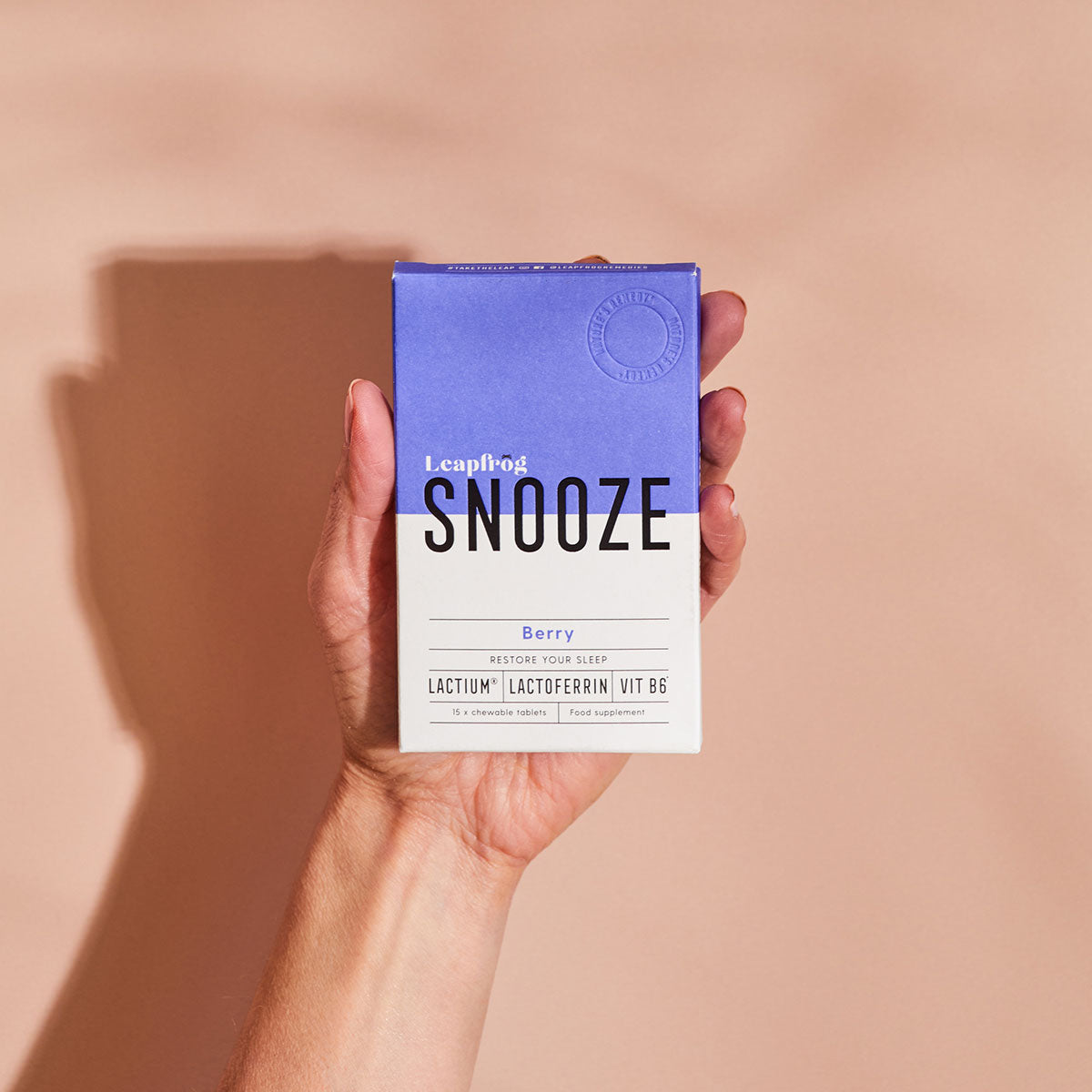
Sleep is the other major piece of the puzzle. If you feel wired but tired, or struggle to switch off at night, improving sleep is often the fastest way to restore your energy. Leapfrog SNOOZE is designed to support a calmer transition into sleep. Its key ingredient, Lactium®, is a natural milk-derived peptide studied for its calming effects and its role in supporting lower cortisol levels, the body’s main stress hormone. It also contains lactoferrin for added immune support, as well as vitamin B6, which contributes to normal psychological function and nervous system health. Used alongside habits like morning light, darker evenings, and a regular bedtime, it can be a helpful extra layer of support when stress or poor sleep are keeping your energy low.
Spring’s returning light is more than just a change in the weather. It is your brain’s cue to wake up. Pair that natural shift with the right daily habits, plus targeted support where needed, and it gets much easier to leave winter behind and feel like yourself again.

Reference List
Aulinas, A. and Arendt, J. (2022). Physiology of the Pineal Gland and Melatonin. [online] PubMed. Available at: https://www.ncbi.nlm.nih.gov/books/NBK550972/.
Danilenko, K.V., Kobelev, E., Semenova, E.A. and Aftanas, L.I. (2019). Summer-winter difference in 24-h melatonin rhythms in subjects on a 5-workdays schedule in Siberia without daylight saving time transitions. Physiology & Behavior, [online] 212, p.112686. doi:https://doi.org/10.1016/j.physbeh.2019.112686.
Gooley, J.J., Chamberlain, K., Smith, K.A., Khalsa, S.B.S., Rajaratnam, S.M.W., Van Reen, E., Zeitzer, J.M., Czeisler, C.A. and Lockley, S.W. (2011). Exposure to room light before bedtime suppresses melatonin onset and shortens melatonin duration in humans. The Journal of Clinical Endocrinology & Metabolism, 96(3), pp.E463–E472. doi:https://doi.org/10.1210/jc.2010-2098.
Kanikowska, D., Roszak, M., Rutkowski, R., Sato, M., Sikorska, D., Orzechowska, Z., Bręborowicz, A. and Witowski, J. (2019). Seasonal differences in rhythmicity of salivary cortisol in healthy adults. Journal of Applied Physiology, 126(3), pp.764–770. doi:https://doi.org/10.1152/japplphysiol.00972.2018.
Potter, G.D.M., Cade, J.E., Grant, P.J. and Hardie, L.J. (2016). Nutrition and the circadian system. British Journal of Nutrition, [online] 116(3), pp.434–442. doi:https://doi.org/10.1017/s0007114516002117.
Premkumar, M., Sable, T., Dhanwal, D. and Dewan, R. (2013). Circadian Levels of Serum Melatonin and Cortisol in relation to Changes in Mood, Sleep, and Neurocognitive Performance, Spanning a Year of Residence in Antarctica. Neuroscience Journal, 2013, pp.1–10. doi:https://doi.org/10.1155/2013/254090.
Scoditti, E. and Garbarino, S. (2022). Nutrition, Sleep, Circadian Rhythms, and Health Implications: ‘Come Together’. Nutrients, 14(23), p.5105. doi:https://doi.org/10.3390/nu14235105.
Wan, Y., Ding, J., Fan, M. and Huang, H. (2025). Effectiveness of visible light for seasonal affective disorder: A systematic review and network meta-analysis. Medicine, 104(27), pp.e43107–e43107. doi:https://doi.org/10.1097/md.0000000000043107.
Wender, C.L.A., Manninen, M. and O’Connor, P.J. (2022). The Effect of Chronic Exercise on Energy and Fatigue States: A Systematic Review and Meta-Analysis of Randomized Trials. Frontiers in Psychology, 13(13). doi:https://doi.org/10.3389/fpsyg.2022.907637.