World Health Day: Small Supports, Big Impact
World Health Day – on April 7th each year - is a reminder that better health for all is possible, through both collective action and small daily choices. It’s a call to policymakers, healthcare systems and public health leaders, but it’s also personal. When life is busy, stress is high, and energy is low, how can we stay well?
At Leapfrog, that question sits at the heart of everything we do.
Health is shaped not only by major interventions, but by simple, evidence-based habits that help us stay resilient. When enough people make those choices consistently, it can have a significant impact: across families, their places of work and the communities they live in.
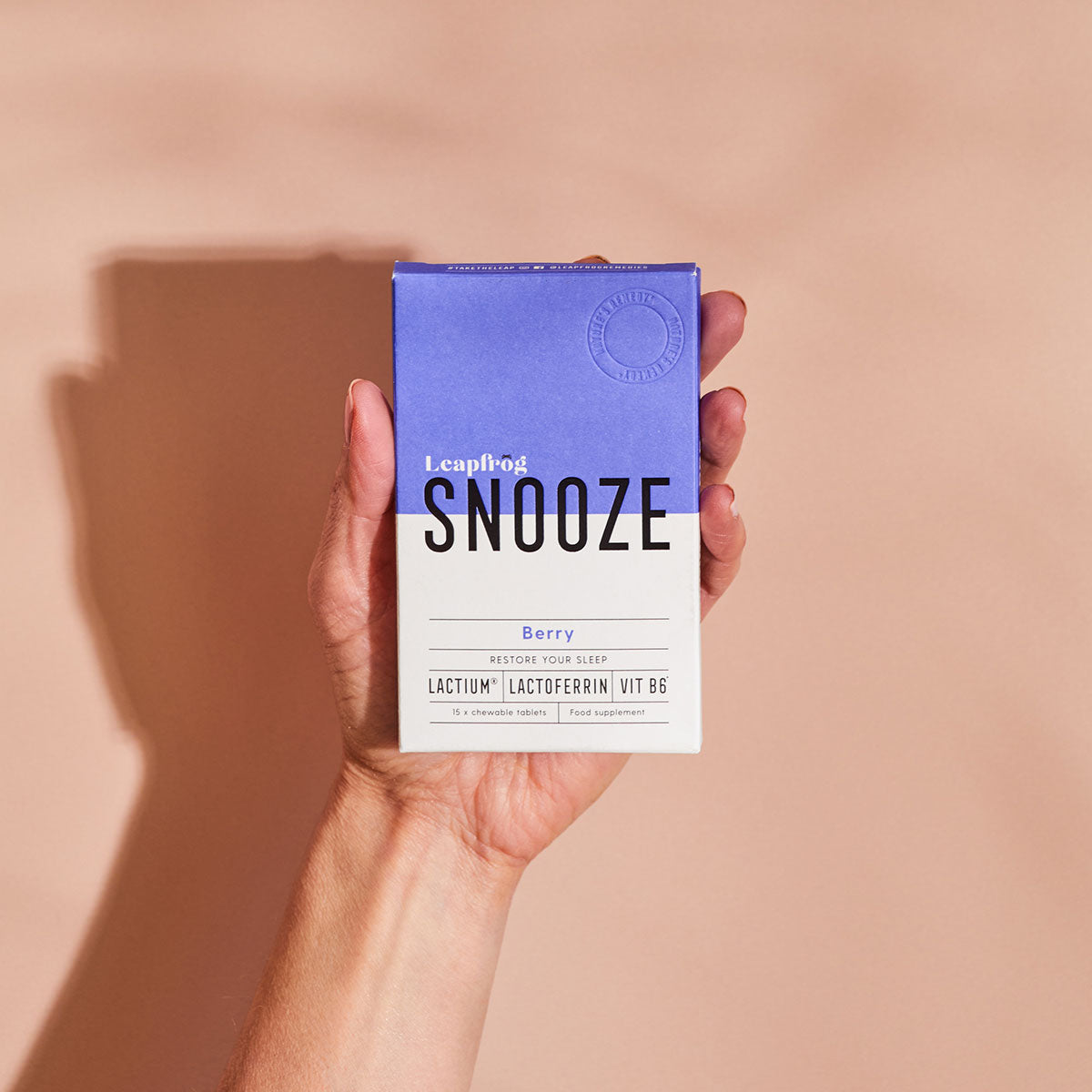
As the founder of Leapfrog, I believe that our brand plays a small but meaningful part in a much bigger health picture. I know that practical, science-led support can make a difference, because our customers tell me. Customers like Caroline, whose daughter’s school attendance soared from 76% - 96%; Kirsty, whose sales team in their open plan office no longer go down like dominoes with dreaded coughs and colds, and Vincent, who has found that SNOOZE works better for bringing on sleep than anything else he’s tried.
The most rewarding part of building Leapfrog is hearing from customers who tell us our supplements help them keep going, so they can show up for their families, their work, and be the best versions of themselves. That kind of support may seem small, but its impact can be profound.
The Price We Pay for Getting Sick
Each year, seasonal flu costs the UK economy an estimated £644 million, equivalent to around £272 per infected worker, with approximately 4.8 million working days lost annually. Beyond flu, the hidden cost of employee sickness across the UK has risen to £103 billion a year - with the most significant losses coming not from sick days alone, but from presenteeism, where employees work at a sub-optimal level. How often have you soldiered on at work, when your body begs for a day off to fully recover? Employee sickness is now estimated to cost the British economy £25 billion per year, with each worker losing 44 days of productivity annually. Illness ripples through workplaces, schools and households, and the effects hit home. Missed school runs, disrupted childcare, cancelled plans, lost income and added stress all take their toll.
No supplement is a magic fix, and we would never claim otherwise. But science-backed immune support can help reduce the frequency or severity of everyday illnesses, potentially leading to fewer missed days, less disruption, and greater day-to-day well-being.
That may sound modest, but it matters.
A Must-Have in the Medicine Cabinet
Leapfrog began as a supplement for my own family to stop the merry-go-round of coughs and colds in our house and to help keep my kids in nursery (and not sick and at home). Our founding story still shapes how we think about the health of our customers.
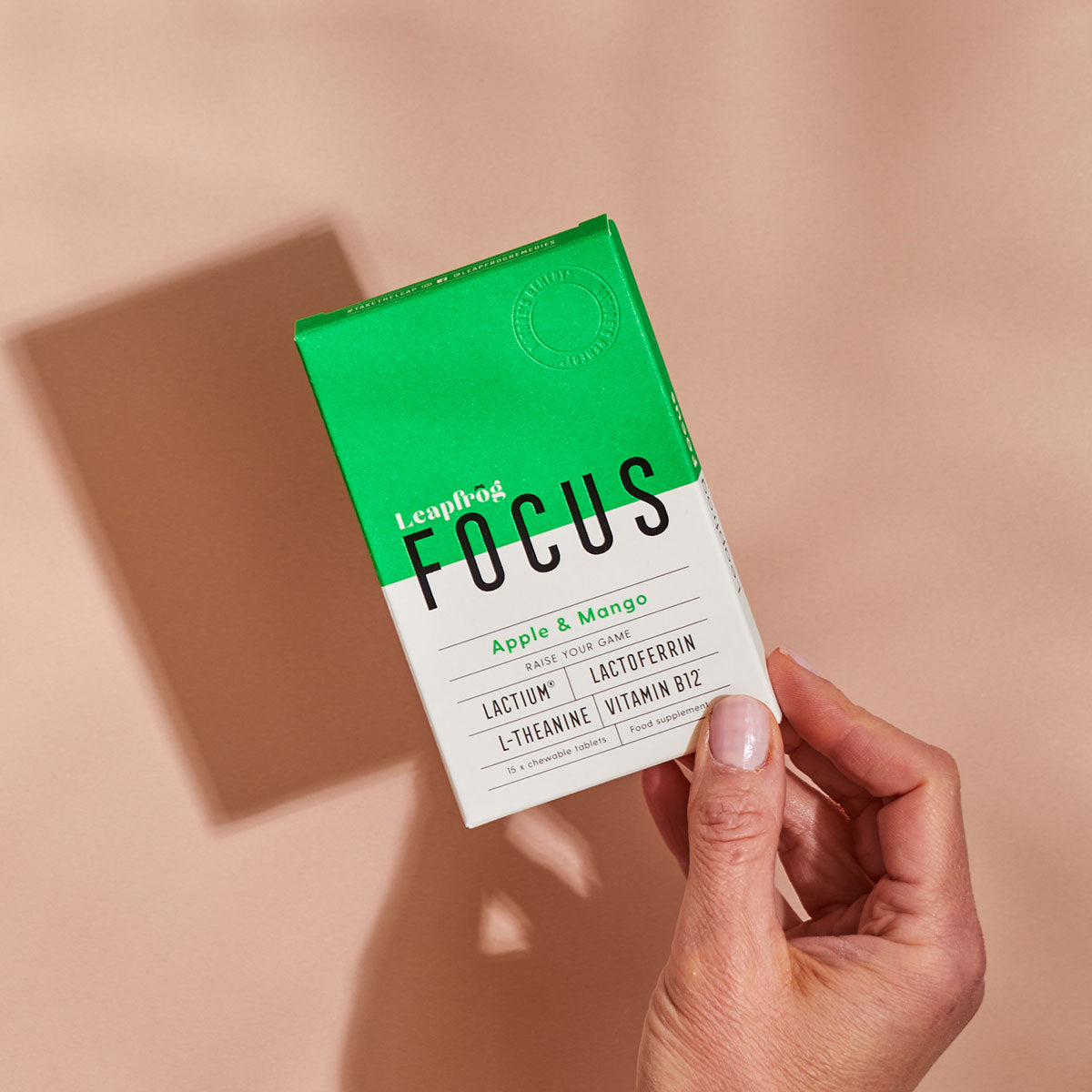
What makes Leapfrog IMMUNE stand out is that it’s suitable for children from the age of 4, which is rare for a premium supplement. It mattered to me because health is rarely isolated within families. When one person becomes unwell, it often affects the whole household. Parents know this all too well: one cold can quickly become four.
At Leapfrog, we formulate our supplements with ingredients that have strong scientific foundations. We’re not following a trend; we’re a pioneering Lactoferrin brand. Though little known, Lactoferrin is older than humanity; found in the colostrum and milk of most mammals, this naturally occurring milk protein plays a vital role in immune defence.
Our Lactoferrin is sourced from cow’s milk, and when combined with Lactium – a milk protein hydrolysate - it can help to alleviate stress and restore sleep. These are two extraordinary bio-actives backed by meaningful academic and clinical research. Lactoferrin is well supported by science and yet hasn’t reached public consciousness. Leapfrog is bringing it into the spotlight.
By supporting immune resilience, Leapfrog can mean fewer coughs and colds, less disruption, less emotional strain, and more stability in daily life.
Making the Science Simple
Many of our community are women, and those I’ve spoken to have often been afflicted by symptoms of perimenopause. Poor sleep, anxiety, low mood, fatigue and reduced resilience are a roll call of conditions that can be closely linked to hormonal change, immune function and the body’s wider stress response.
Our aim at Leapfrog has been to offer simple solutions. As our world evolves at lightning speed, our brand takes its cue from Mother Nature: Lactoferrin’s benefits are so broad – anti-viral, anti-bacterial, anti-inflammatory, gut-enhancing – that our Leapfrog formulations don’t need to be complicated. It means we can make our science-backed support with fewer ingredients and more relevant to real life, particularly during stages when women are too often left to join the dots on their own.

Sleep, Stress, Mental Health and Productivity
The UK’s health challenges do not begin and end with infection. Sleep deprivation, stress and mental ill-health also have enormous personal and societal consequences.
Sleep deprivation costs the UK economy up to £40 billion a year - around 1.86% of GDP - with the UK losing approximately 200,000 working days annually as a result. The personal stakes are equally stark: sleeping under six hours a night is associated with a 13% higher mortality risk compared to sleeping seven to nine hours. Meanwhile, mental health problems cost the UK economy at least £118 billion a year, equivalent to 5% of GDP, with nearly three-quarters of that cost stemming from lost productivity among people living with mental health conditions. Behind those figures are real people trying to function while running on empty - I’ve personally had many conversations with customers who are desperately seeking a solution.
Sleep, stress, mood and physical resilience are deeply interconnected. When one starts to slip, the others often follow.
This is where ingredients such as Lactium may offer helpful support as part of a wider wellbeing strategy. Clinical studies suggest that Lactium – which contains the peptide alpha-casozepine that gives babies a post-milk-feed sense of serenity - may help improve perceived stress and sleep quality when taken consistently over time.
Of course, no supplement should be seen as a treatment for sleep disorders or mental health conditions. But when used appropriately, evidence-based nutritional support can sit alongside the fundamentals that matter most, including sleep hygiene, movement, balanced nutrition, rest and self-care, something our Leapfrog team works hard to promote.
A Small Contribution to a Much Bigger Story
World Health Day reminds us that health is built at every level. It depends on strong systems, better research, fairer access, and public policies that protect people well. But it also reminds that how we eat, how we sleep, how we manage stress, how we recover, and how we support one another can make a difference too.
If Leapfrog can make even a modest contribution, helping people feel a little stronger, a little steadier and a little more able to keep going, then that matters.
Because when one person feels better, the benefits ripple outward to their families, their work and their social sphere. If you choose to try Leapfrog, let us know how you get on by writing to us at hello@leapfrogremedies.com – every experience matters to us.
Reference list
BBC News. (2016). Sleep deprivation ‘costs UK £40bn a year’. [online] Available at: https://www.bbc.co.uk/news/business-38151180.
Berthon, B.S., Williams, L.M., Williams, E.J. and Wood, L.G. (2022). The Effect of Lactoferrin Supplementation on Inflammation, Immune Function, and Prevention of Respiratory Tract Infections in Humans: A Systematic Review and Meta-Analysis. Advances in Nutrition. doi:https://doi.org/10.1093/advances/nmac047.
Garg, R. and Munshi, A. (2025). Menopause and Mental Health. Journal of Mid-life Health, [online] 16(2), pp.119–123. doi:https://doi.org/10.4103/jmh.jmh_61_25.
Hakiza, S. and Ferazzi, S. (2026). Women’s right to science and health: 30 years on, progress and gaps remain. International Health. doi:https://doi.org/10.1093/inthealth/ihag011.
Mental Health Foundation. (2022). Mental health problems cost UK economy at least GBP 118 billion a year. [online] Available at: https://www.mentalhealth.org.uk/about-us/news/mental-health-problems-cost-uk-economy-least-gbp-118-billion-year.
Monica, 1776 M.S.S. and California 90401-3208 (2016). Lack of Sleep Costing UK Economy Up to £40 Billion a Year. [online] www.rand.org. Available at: https://www.rand.org/news/press/2016/11/30/index1.html.
Moro, J., Boulier, A. and Cremonese, V. (2022). Evaluation of Perceived Stress and Sleep Improvement With the Dairy Bioactive Lactium®. Current Developments in Nutrition, [online] 6, pp.318–318. doi:https://doi.org/10.1093/cdn/nzac053.059.
Romanelli, R.J., Cabling, M., Marciniak-Nuqui, Z., Marjanovic, S., Morris, S., Dufresne, E. and Yerushalmi, E. (2023). The societal and indirect economic burden of seasonal influenza in the United Kingdom. [online] www.rand.org. Available at: https://www.rand.org/pubs/research_reports/RRA2165-1.html.
World (2026). World Health Day 2026: Standing with science through a One Health approach. [online] Who.int. Available at: https://www.who.int/europe/news/item/01-04-2026-world-health-day-2026--standing-with-science-through-a-one-health-approach [Accessed 5 Apr. 2026].