Ferritin: The Hidden Iron Marker That Could Explain Your Fatigue
Fatigue has a way of creeping into everyday life, where at first, it is easy to explain away. A busy week, poor sleep, too much stress, or simply getting older can all seem like reasonable answers. But when exhaustion lingers, even after you've rested, it is natural to wonder whether something deeper is going on.
One of the most overlooked clues is ferritin. Unlike a standard iron test, which measures the iron circulating in your bloodstream at a particular moment, ferritin reflects the iron your body has stored away for future use. You can think of it as the body's reserve tank. Those reserves help keep essential processes running when daily iron intake falls short or the body's iron needs increase, but they are not unlimited.
Iron deficiency begins long before anaemia
Iron deficiency is rarely a sudden event. More often, it develops gradually as the body quietly draws on its iron stores to meet everyday demands. Ferritin is usually one of the first markers to fall during this process, often long before haemoglobin drops enough for iron deficiency anaemia to be diagnosed. By the time anaemia appears, the body has frequently been adapting to shrinking iron reserves for weeks or even months.
This helps explain why someone can feel persistently tired despite being told their blood tests are "normal". If only haemoglobin has been assessed, depleted iron stores may go unnoticed. Yet those falling reserves can already be affecting tissues that depend heavily on iron, leaving you feeling unusually tired, mentally foggy, slower to recover after exercise or simply as though your energy never fully returns.
Ferritin is more than an iron store
Although ferritin is often described as the body's iron storage protein, its role is far more sophisticated than simply acting as a warehouse. Ferritin forms a protective protein shell that safely locks iron away inside cells, preventing free iron from generating damaging reactive oxygen species while keeping it available when the body needs it. Most ferritin is stored within the liver, spleen, bone marrow and specialised immune cells called macrophages, where it plays a central role in maintaining iron balance.
This balance is essential because iron is both indispensable and potentially harmful. Too little iron limits the body's ability to produce energy, while too much free iron can contribute to oxidative stress and cellular damage. Ferritin helps solve this problem by storing iron safely until it is needed, allowing the body to carefully regulate one of its most important minerals.
Why low ferritin can leave you feeling drained
Iron supports far more than the production of red blood cells. It is essential for mitochondrial respiration, the process that allows cells to generate ATP, the body's main source of usable energy. Iron also supports DNA synthesis, neurotransmitter production, muscle metabolism and hundreds of enzyme-driven reactions that keep cells functioning normally.
As ferritin levels fall and iron stores become depleted, these systems may begin to operate less efficiently, even while haemoglobin remains within the normal range. High-energy tissues, including muscles and the brain, are often among the first to feel the effects. This can show up as persistent fatigue, reduced stamina, difficulty concentrating, exercise intolerance, restless legs or a general feeling of being depleted.
Research suggests that restoring iron stores can reduce fatigue in people with low ferritin, even before iron deficiency progresses to anaemia. This highlights why ferritin has become an increasingly important marker when investigating unexplained tiredness.
Where lactoferrin fits into the picture

Ferritin is not the only protein involved in iron biology. Lactoferrin also plays an important role, although its job is quite different.
Rather than storing iron inside cells, lactoferrin is an iron-binding glycoprotein found in milk, tears, saliva, neutrophils and the mucosal surfaces that line the gut and respiratory tract. Here, it helps regulate iron availability in places where the body comes into regular contact with microbes. By tightly binding iron, lactoferrin can help limit the supply available to bacteria while supporting immune defence and tissue protection.
Together, ferritin and lactoferrin illustrate how carefully the body manages iron, maintaining healthy iron homeostasis (or balance). Ferritin stores it safely for future use, while lactoferrin helps direct and protect it where immune activity is greatest.
Why ferritin should always be interpreted in context
Despite its clinical value, ferritin is not a perfect marker in isolation. It is also an acute-phase protein, meaning its levels rise during inflammation, infection, and some chronic diseases. In these situations, ferritin can appear normal or even elevated despite the body having insufficient usable iron, a phenomenon often referred to as functional iron deficiency.
For that reason, ferritin is most informative when interpreted alongside symptoms, medical history and, where appropriate, other laboratory markers. Looking at the whole clinical picture provides a much clearer understanding than relying on a single number alone.
Lactoferrin and iron balance
Fatigue is not always just about low iron; it is about how the body manages and uses this essential mineral. Ferritin provides a glimpse into iron stores, while lactoferrin plays a unique role in helping regulate iron availability and support the body’s natural defence systems.
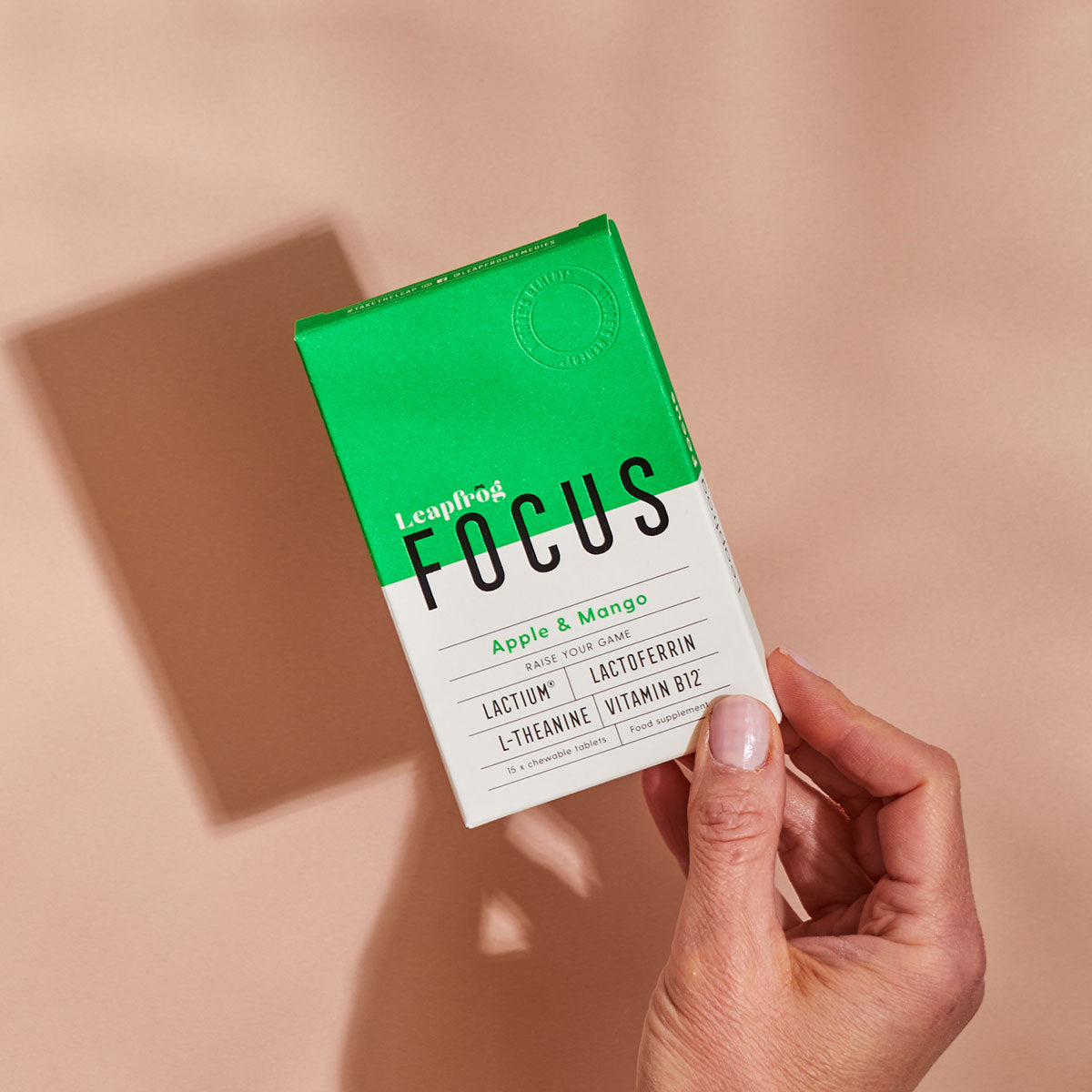
This is why lactoferrin is a key ingredient across Leapfrog Remedies’ supplements. Found in IMMUNE, DAILY, FOCUS, and SNOOZE, this naturally occurring iron-binding protein helps support the body’s delicate balance between iron regulation, immune function and everyday resilience.
Leapfrog DAILY (100mg lactoferrin, blood orange flavour) and Leapfrog IMMUNE (250mg lactoferrin, citrus flavour) are built around the science of binding iron - giving a dose in line with the levels used in clinical research, without the gut fallout of conventional tablets.
IRON RESET
Leapfrog IMMUNE (250mg) is for when you're actively working on your iron levels, matched to clinically-studied doses

IRON MAINTENANCE
Leapfrog DAILY (100mg) is for everyday maintenance once you're feeling more like yourself

By harnessing the power of lactoferrin into chewable tablets for easy absorption, Leapfrog Remedies delivers targeted wellness support designed to help you perform, recover, and feel your best every day.

Reference list
Al-Naseem, A., Sallam, A., Choudhury, S. and Thachil, J. (2021). Iron deficiency without anaemia: A diagnosis that matters. Clinical medicine, [online] 21(2), pp.107–113. doi:10.7861/clinmed.2020-0582.
Balendran, S. and Forsyth, C. (2021). Non-anaemic iron deficiency. Www.nps.org.au, [online] 44(6). doi:10.18773/austprescr.2021.052.
Garcia-Casal, M.N., Pasricha, S.-R., Martinez, R.X., Lopez-Perez, L. and Peña-Rosas, J.P. (2021). Serum or plasma ferritin concentration as an index of iron deficiency and overload. Cochrane database of systematic reviews, 5(5). doi:10.1002/14651858.cd011817.pub2.
Krayenbuehl, P.-A., Battegay, E., Breymann, C., Furrer, J. and Schulthess, G. (2011). Intravenous iron for the treatment of fatigue in nonanemic, premenopausal women with low serum ferritin concentration. Blood, 118(12), pp.3222–3227. doi:10.1182/blood-2011-04-346304.
Lemaire, B., Frias, M.A., Golaz, O., Magnin, J.-L., Viette, V., Vuilleumier, N. and Waldvogel Abramowski, S. (2024). Ferritin: A biomarker requiring caution in clinical decision. Diagnostics (basel, switzerland), [online] 14(4), p.386. doi:10.3390/diagnostics14040386.
Tarancon-Diez, L., Genebat, M., Roman-Enry, M., Vázquez-Alejo, E., Espinar-Buitrago, M. de la S., Leal, M. and Muñoz-Fernandez, M.Á. (2022). Threshold ferritin concentrations reflecting early iron deficiency based on hepcidin and soluble transferrin receptor serum levels in patients with absolute iron deficiency. Nutrients, 14(22), p.4739. doi:10.3390/nu14224739.
Vaucher, P., Druais, P.-L., Waldvogel, S. and Favrat, B. (2012). Effect of iron supplementation on fatigue in nonanemic menstruating women with low ferritin: A randomized controlled trial. CMAJ : Canadian medical association journal = journal de l’association medicale canadienne, [online] 184(11), pp.1247–54. doi:10.1503/cmaj.110950.