Why Is Sleep So Good For Your Immune System?
Can’t sleep? You're not alone. When stress or a racing mind steals your rest, your immune system pays the price. However, sleep is its nightly workshop. While you drift off, immune cells reposition, inflammation rebalances, and your brain flushes toxins, all orchestrated by your internal clock. Irregular sleep habits or sleepless nights disrupt this process, ramping up inflammation and leaving you prone to colds, slower recovery, and even long-term health risks. Here’s the science:

Your Immune System’s Night Shift: What Happens While You Sleep
Think of your immune system as a night-shift team. During deep non-REM sleep (the first few hours after you fall asleep), cortisol (the stress hormone) drops, and growth hormone rises. This shift triggers pro-inflammatory cytokines (immune-signalling proteins) start their work, recruiting repair teams (like monocytes and neutrophils) without overdoing it. It’s like a controlled clean-up after a busy day.
At the cellular level, T cells (your adaptive immune “specialists”) migrate from the bloodstream into lymph nodes, where they learn how to fight any germs they have encountered. Natural killer (NK) cells (rapid responders) become stickier, improving their ability to identify invaders. Meanwhile, the glymphatic system, the brain’s waste removal system, activates, clearing out beta-amyloid and other toxins 60% faster than when you are awake. Microglia (brain immune cells) stretch out and scan synapses for damage, without interference from daytime stress.
Why this matters: a good night’s sleep helps “save” immune memory, which is critical after vaccines and infections. But if anxiety keeps you awake, even a partial loss of sleep can slash your immune response by half.

Innate vs. Adaptive Immunity: Sleep’s Double Duty
Your immune system operates with two teams, and sleep influences both differently:
Innate Immunity (Fast, Non-Specific)
Role: Tackles immediate threats like the flu via inflammation and phagocytosis.
How Sleep Helps: Nocturnal cytokines balance inflammation and boost NK cell activity, enhancing the immune response.
Impact of Sleep Deprivation: One night of poor sleep spikes. Chronic poor sleep leads to sustained low-grade inflammation, raising the risk of heart disease and diabetes.
Adaptive Immunity (Slow, Targeted)
Role: Builds long-term immunity using T/B cells and antibodies.
How Sleep Helps: Early sleep hormone changes (low cortisol, high prolactin) stimulate T-cell priming in lymph nodes.
Impact of Sleep Deprivation: Lack of sleep weakens adaptive immunity. Studies show that poor sleep results in a 50% reduction in vaccine responses and slower viral clearance.
2.
Lack of sleep overloads the innate immune system and weakens the adaptive response. That’s why sleep-deprived flu symptoms seem to drag on forever.

The Real Damage: How Sleep Deprivation Impacts Immunity
One night of missed sleep can have an immediate impact. For instance, leukocytes (white blood cells) spike, and inflammation pathways activate. Consistent sleep loss is even worse, reprogramming stem cells to produce pro-inflammatory cells that linger after recovery. Here is what happens in real life:
·
- 2-4x higher cold/respiratory infection risk.
- Slower healing: A sore throat or flu lasts longer.
- Weakened vaccine responses: If you’ve had trouble sleeping after a vaccine, your protection may be weaker.
- Long-term risks: Chronic inflammation can contribute to autoimmunity, cancer, and neurodegeneration.
Women often feel these effects more acutely, as hormonal fluctuations combined with sleep loss amplify inflammatory responses, worsening conditions like period insomnia, polycystic ovarian syndrome (PCOS) flare-ups, and fertility challenges.
Circadian Chaos
Your immune system follows a 24-hour rhythm aligned with your sleep-wake cycle and light exposure. Immune cells like T cells and monocytes perform key tasks, such as releasing protective signals and producing antibodies, in sync with your activity-rest pattern. Consistent sleep boosts melatonin at night, triggering immune repair, activating brain detox, and maintaining balance.
Irregular sleep disrupts this rhythm. Late-night screen time delays melatonin production, while weekend sleep-ins create "social jet lag," causing immune misalignment. This leads to weakened immune defences, increased inflammation, and slower vaccine responses. Shift workers, for instance, face a 30% higher illness risk due to circadian disruption.
Stress and anxiety worsen the issue by raising cortisol, further throwing off your internal clock. Though catch-up sleep can help you feel better, it doesn't fully restore immune function. The key to staying healthy is consistency.
Actionable Sleep Hygiene: Build Immune-Proof Habits
Ready to turn science into simple steps that work for you? Here are stackable sleep habits + foods tailored to support your immune system, especially helpful when anxiety keeps you up at night:
- Stick to a consistent schedule: Go to bed and wake up at the same time every day (within 30 minutes), even on weekends. This helps anchor your body’s internal rhythm and prevents social jet lag, which spikes inflammation.
- Create a cool, dark, quiet bedroom: Keep the room between 16-18°C, use blackout curtains, and try earplugs or white noise. This helps your body enter deeper sleep, maximising brain detox and immune cell movement.
- Master an evening routine: Wind down with calming activities like deep breathing for sleep (try the 4-7-8 method), journaling, or gentle stretches. Avoid screens for at least an hour before bed. To relax your mind and body, drink tart cherry juice (natural melatonin) or enjoy a banana with almond butter (magnesium + tryptophan) to calm nerves and boost serotonin.
- Nap smart: If you need a nap, keep it to 20-30 minutes before 2pm. Have a cup of chamomile tea before your nap to boost your immune system without stealing from your night-time sleep.
- Can’t sleep before your period? Try oats with walnuts (magnesium + omega-3s) and practice deep breathing to combat progesterone dips and period insomnia.
- Struggling with PCOS or fertility stress? Stick to a regular 10pm bedtime and eat salmon or chia pudding (omega-3s). This helps balance your hormones and supports immune repair.
These habits, along with the right foods, help rebuild what sleep deprivation steals, night by night.

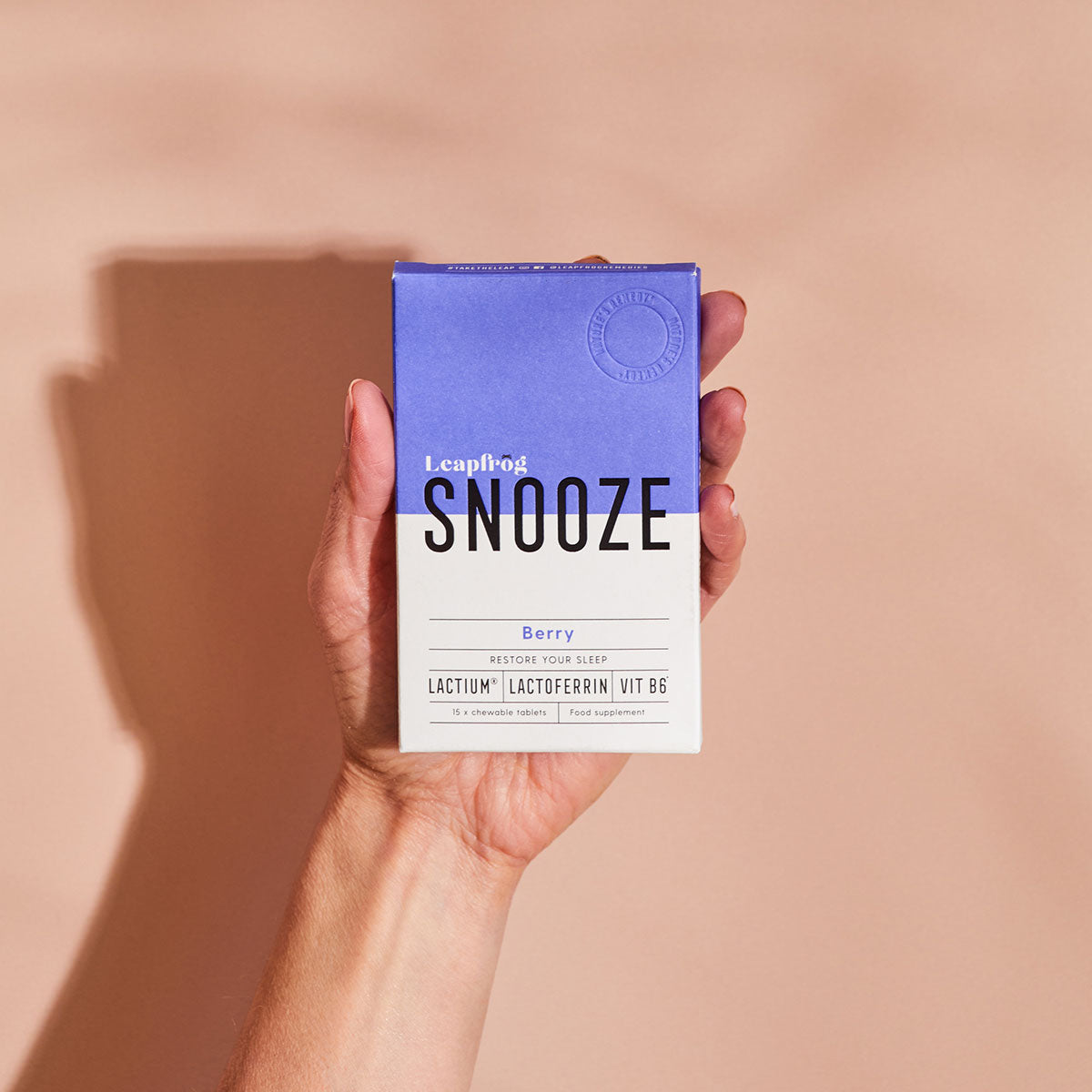
Leapfrog SNOOZE + IMMUNE: Your Sleep-Deprived Immunity Rescue Duo
When anxiety or erratic schedules mess with your rest, Leapfrog’s SNOOZE and IMMUNE step in as your go-to allies, bridging the gap until consistency takes over.
SNOOZE blends Lactoferrin, Lactium®, Vitamin B6 to quiet racing minds and deepen slow-wave sleep. It’s perfect for tackling anxiety-induced insomnia, restoring the balance of nocturnal cytokines and supporting the glymphatic flush that sleep deprivation disrupts.
IMMUNE is packed with Lactoferrin, Zinc, and Vitamin C to counteract the immune overload caused by sleep loss. It boosts NK cells and supports antibody priming when T-cell traffic is sluggish, shortening flu recovery and reducing inflammation spikes. Perfect during stressful periods, it’s also gut-supportive, helping to balance hormones.
This duo doesn’t replace sleep; it amplifies your habits, turning chaotic nights into immune wins. With Leapfrog Remedies, consistency + sleep hygiene rebuild resilience, helping your body thank you by morning.
Reference list
Besedovsky, L. and Born, J. (2015). Sleep, Don’t Sneeze: Longer Sleep Reduces the Risk of Catching a Cold. Sleep, 38(9), pp.1341–1342. doi:https://doi.org/10.5665/sleep.4958.
Besedovsky, L., Lange, T. and Born, J. (2011). Sleep and immune function. Pflügers Archiv - European Journal of Physiology, [online] 463(1), pp.121–137. doi:https://doi.org/10.1007/s00424-011-1044-0.
Ding, J., Chen, P. and Qi, C. (2023). Circadian rhythm regulation in the immune system. Immunology, 171(4), pp.525–533. doi:https://doi.org/10.1111/imm.13747.
Irwin, M.R. (2019). Sleep and inflammation: partners in sickness and in health. Nature Reviews Immunology, [online] 19(11). doi:https://doi.org/10.1038/s41577-019-0190-z.
Labrecque, N. and Cermakian, N. (2015). Circadian Clocks in the Immune System. Journal of Biological Rhythms, 30(4), pp.277–290. doi:https://doi.org/10.1177/0748730415577723.
Reddy, O.C. and van der Werf, Y.D. (2020). The Sleeping Brain: Harnessing the Power of the Glymphatic System through Lifestyle Choices. Brain Sciences, [online] 10(11), p.868. doi:https://doi.org/10.3390/brainsci10110868.
Stowell, R.D., Sipe, G.O., Dawes, R.P., Batchelor, H.N., Lordy, K.A., Whitelaw, B.S., Stoessel, M.B., Bidlack, J.M., Brown, E., Sur, M. and Majewska, A.K. (2019). Noradrenergic signaling in the wakeful state inhibits microglial surveillance and synaptic plasticity in the mouse visual cortex. Nature Neuroscience, [online] 22(11), pp.1782–1792. doi:https://doi.org/10.1038/s41593-019-0514-0.
Waggoner, S.N. (2020). Circadian Rhythms in Immunity. Current Allergy and Asthma Reports, 20(1). doi:https://doi.org/10.1007/s11882-020-0896-9.