How Does Sunlight Help The Body?
Stuck inside all day? You’re not alone. Modern life is a steady drip of low-level stress: noise, harsh lights, traffic, pollution, crowds, endless screens. Even if you don’t feel it, your nervous system is always on alert. Spending most of your time indoors only ramps things up. Dim lighting, hours of sitting, stale air, and a lack of nature throw off your body clock, spike stress hormones, mess with your sleep, and quietly fuel inflammation.
Over time, this leaves you wired but worn out. You might snap more easily, struggle to cope, or find yourself tossing and turning at night. Burnout and colds start to creep in. Here’s where daylight and green spaces step in: they signal safety to your nervous system, reset your daily stress rhythms, deepen your sleep, and give your body the tools it needs to recover and keep your immune system resilient.
How Morning Daylight Helps Reset Your Stress Response Naturally
Daylight is your body’s master clock. When morning light hits your eyes, it tells your brain to set the daily rhythm for hormones like cortisol and melatonin, as well as your body temperature and alertness.
Morning light is the real game-changer. It sparks a healthy cortisol rise to kickstart your day, then lets levels drop as the hours pass. This sets you up for steady energy, sharper focus, deeper sleep, and a calmer stress response.
Dim indoor lighting and chaotic routines throw your body clock off track. The result? Restless sleep, flatlined cortisol rhythms, and creeping inflammation.
Even a few minutes of morning daylight can lift your mood, calm stress, and reset your body for deeper sleep and a stronger immune system.
How Green Space Calms Stress and Supports Immune Balance
Green spaces are your body’s natural reset button. Parks, gardens, and forests send calming signals to your nervous system and help your immune system find its balance.
Time in nature dials down cortisol and soothes your stress response, shifting your body from fight-or-flight into recovery mode. Your heart rate steadies, anxiety fades, and you bounce back faster. Here’s how it works:
- Sensory calm: Seeing trees and hearing natural sounds tells your brain it’s safe, letting your nervous system finally relax.
- Plant power: Certain trees release phytoncides - natural airborne compounds that help you relax, sleep more deeply, and give your immune system a boost.
- Cleaner air: Green spaces cool things down and filter out pollutants, taking pressure off your lungs and immune defences.
All of this helps your immune system stay balanced and ready
People living near green spaces tend to have lower levels of chronic inflammation and a more balanced immune system. Forest time can boost your natural killer (NK) cells, your body’s rapid-response team against viruses. The more biodiverse the environment, the bigger the benefits. Touching soil, brushing past leaves, breathing in forest air, all of this feeds your skin, gut, and airway microbiomes. These microbes train your immune system to respond just right, building tolerance and preventing overreactions.

Why Biodiverse Nature Matters Most (Especially for Children)
Any nature time helps, but the wilder and more varied, the better. The more plants, trees, soil, water, and textures you’re exposed to, the more your body gets the message to relax, recover, and keep inflammation in check.
Richer natural environments also mean more helpful microbes from soil, leaves, bark, and air. Over time, this builds a more balanced microbiome and gives your immune system the daily training it needs to stay strong and avoid overreacting.
This is even more crucial for kids. Their immune systems are still learning to distinguish between friend or foe. Early time in green spaces is linked to lower risks of allergies, asthma, and eczema, and helps set up a healthier, more balanced immune response for life.
Simple Daily Habits to Lower Stress and Support the Immune System Naturally
You don’t need a wilderness retreat to feel the difference. Short bursts of morning sunlight and daily nature time add up fast. The real magic happens when these habits become part of your everyday routine.
To get the most out of nature, try these habits:
- Get outside for morning daylight whenever you can.
- Aim for green space most days, even a quick walk in a park or garden counts. When you can, seek out wilder, more biodiverse spots.
- Guard your sleep: wake up at the same time daily and keep lights low at night. Fill your meals with protein, fibre, and colourful plants to feed your microbiome and keep your immune system in top shape.
Where Leapfrog Remedies Fit In
Daylight, green space, movement, and good sleep are the foundations of stress resilience and immune health. Leapfrog supplements are designed to work alongside those basics, not replace them.
When immune demands are higher, Leapfrog IMMUNE can provide targeted daily support. Its blend of lactoferrin, zinc, and vitamin C helps reinforce your body’s natural defences, supporting frontline immunity, recovery, and resilience when you’re run down.
Sleep is the other major piece of the puzzle. If you feel wired but tired, or struggle to switch off at night, improving sleep is often one of the fastest ways to restore energy, lower stress, and support immune function.
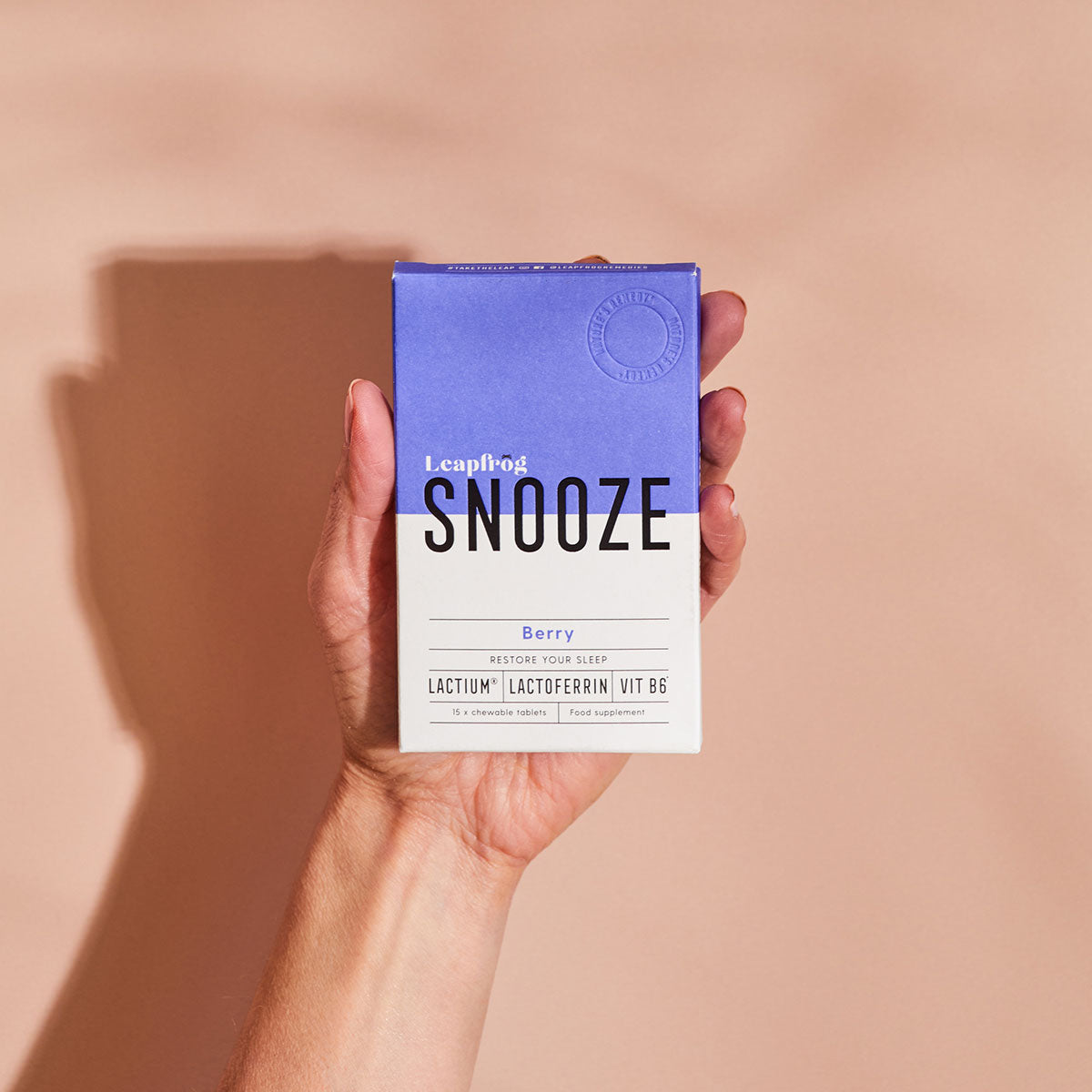
That’s where Leapfrog SNOOZE fits in. It’s designed to support a smoother transition into sleep, especially when stress keeps your system switched on. Its key ingredient, Lactium®, is a natural milk-derived peptide studied for its calming effects and its role in supporting healthy cortisol balance. It also contains lactoferrin for added immune support, plus vitamin B6 to support normal psychological function and nervous system health.
Used together with habits like morning light, darker evenings, regular sleep timing, and time outdoors, Leapfrog IMMUNE and Leapfrog SNOOZE offer extra support when stress, poor sleep, or immune pressure start to build.
Nature and routine lay the groundwork. Targeted nutrients help reinforce it.

Reference list
Aulinas, A. and Arendt, J. (2022). Physiology of the Pineal Gland and Melatonin. [online] PubMed. Available at: https://www.ncbi.nlm.nih.gov/books/NBK550972/.
Danilenko, K.V., Kobelev, E., Semenova, E.A. and Aftanas, L.I. (2019). Summer-winter difference in 24-h melatonin rhythms in subjects on a 5-workdays schedule in Siberia without daylight saving time transitions. Physiology & Behavior, [online] 212, p.112686. doi:https://doi.org/10.1016/j.physbeh.2019.112686.
Gooley, J.J., Chamberlain, K., Smith, K.A., Khalsa, S.B.S., Rajaratnam, S.M.W., Van Reen, E., Zeitzer, J.M., Czeisler, C.A. and Lockley, S.W. (2011). Exposure to room light before bedtime suppresses melatonin onset and shortens melatonin duration in humans. The Journal of Clinical Endocrinology & Metabolism, 96(3), pp.E463–E472. doi:https://doi.org/10.1210/jc.2010-2098.
Kanikowska, D., Roszak, M., Rutkowski, R., Sato, M., Sikorska, D., Orzechowska, Z., Bręborowicz, A. and Witowski, J. (2019). Seasonal differences in rhythmicity of salivary cortisol in healthy adults. Journal of Applied Physiology, 126(3), pp.764–770. doi:https://doi.org/10.1152/japplphysiol.00972.2018.
Potter, G.D.M., Cade, J.E., Grant, P.J. and Hardie, L.J. (2016). Nutrition and the circadian system. British Journal of Nutrition, [online] 116(3), pp.434–442. doi:https://doi.org/10.1017/s0007114516002117.
Premkumar, M., Sable, T., Dhanwal, D. and Dewan, R. (2013). Circadian Levels of Serum Melatonin and Cortisol in relation to Changes in Mood, Sleep, and Neurocognitive Performance, Spanning a Year of Residence in Antarctica. Neuroscience Journal, 2013, pp.1–10. doi:https://doi.org/10.1155/2013/254090.
Scoditti, E. and Garbarino, S. (2022). Nutrition, Sleep, Circadian Rhythms, and Health Implications: ‘Come Together’. Nutrients, 14(23), p.5105. doi:https://doi.org/10.3390/nu14235105.
Wan, Y., Ding, J., Fan, M. and Huang, H. (2025). Effectiveness of visible light for seasonal affective disorder: A systematic review and network meta-analysis. Medicine, 104(27), pp.e43107–e43107. doi:https://doi.org/10.1097/md.0000000000043107.
Wender, C.L.A., Manninen, M. and O’Connor, P.J. (2022). The Effect of Chronic Exercise on Energy and Fatigue States: A Systematic Review and Meta-Analysis of Randomized Trials. Frontiers in Psychology, 13(13). doi:https://doi.org/10.3389/fpsyg.2022.907637.