What’s the Difference Between Stress and Anxiety?
Stress and anxiety can feel so similar that it’s easy to confuse the two. Both can leave you overthinking, struggling to sleep, feeling tense or noticing that familiar knot in your stomach. In the moment, they can look almost identical, but what’s going on underneath is slightly different.
Stressed? There’s usually a reason why
Stress tends to have something you can point to. Maybe you’ve got a deadline coming up, your to-do list is getting ridiculous, you’ve had an argument with someone or you’re simply trying to juggle too many things at once.
Your brain picks up on that pressure and your body responds. Stress hormones such as adrenaline and cortisol are released, your heart might beat a little faster and you become more alert.
And that isn’t necessarily a bad thing. In fact, a little bit of stress can be useful. It’s part of the reason you suddenly become incredibly productive the night before a deadline.
Usually, once the stressful situation is over, those feelings start to settle down too.
So, how is anxiety different?
Anxiety doesn’t always need something to be happening right now.
Instead, it often centres around what might happen. You might find yourself going over different scenarios in your head, worrying about something that hasn’t happened yet or feeling on edge without really knowing why.
One way to think about it is:
Stress: “I’m worried because something is happening.”
Anxiety: “I’m worried about what could happen.”
Of course, real life isn’t quite that tidy. The two often overlap, and being stressed for a long time can leave you feeling increasingly anxious.
Stress doesn’t just stay in your head
When you’re stressed, your brain doesn’t deal with it in isolation. It sends signals around the body, including triggering the release of cortisol. Cortisol is a normal part of our stress response and also helps regulate inflammation and immune activity.
The occasional stressful day isn’t going to suddenly “switch off” your immune system. But when stress sticks around for weeks or months, repeatedly activating these systems can start to change the way immune and inflammatory responses are regulated.
So, while we often think of stress as something purely mental, your immune system is part of the conversation too.
Why does everything feel worse after a bad night’s sleep?
Ever noticed that your brain suddenly wants to revisit every awkward conversation you’ve had since 2012 the second your head hits the pillow?
Stress and anxiety can make it harder to sleep, and poor sleep can make it harder to deal with stress the next day. Sleep also plays an important role in normal immune function, so these systems can end up feeding into one another.
Stress affects sleep, poor sleep can make stress feel worse, and both are connected to how our immune system functions.
What can you do about stress?
There’s no magic trick that makes stress disappear, but some of the boring-sounding basics really do matter.
Try to protect your sleep rather than treating it as the first thing you can sacrifice when life gets busy. Move your body, even if that’s just getting outside for a walk. And if you’re already feeling jittery, it might be worth questioning whether that fourth coffee is helping.
Finding something that gets you out of your own head can help too. That might be exercise, reading, painting, journalling, meditation, deep breathing or seeing a friend. It doesn’t need to look like a perfectly curated “self-care routine”. It just needs to give your brain a chance to switch gears.
And talk to people if you feel comfortable doing so. Stress has a habit of feeling much bigger when it stays entirely inside your own head.
If anxiety is sticking around, feels difficult to control or is getting in the way of everyday life, it’s worth speaking to a healthcare professional. There are effective treatments and approaches, including Cognitive Behavioural Therapy (CBT), that can help.
They’re different, but closely connected
Stress and anxiety aren’t the same thing, even if they sometimes feel that way. Stress usually responds to something happening around us, while anxiety is often more focused on what could happen next.
And looking after a stressed-out brain isn’t only about feeling calmer. Your brain, sleep, hormones and immune system are all talking to each other, whether you realise it or not.
How can Leapfrog help?
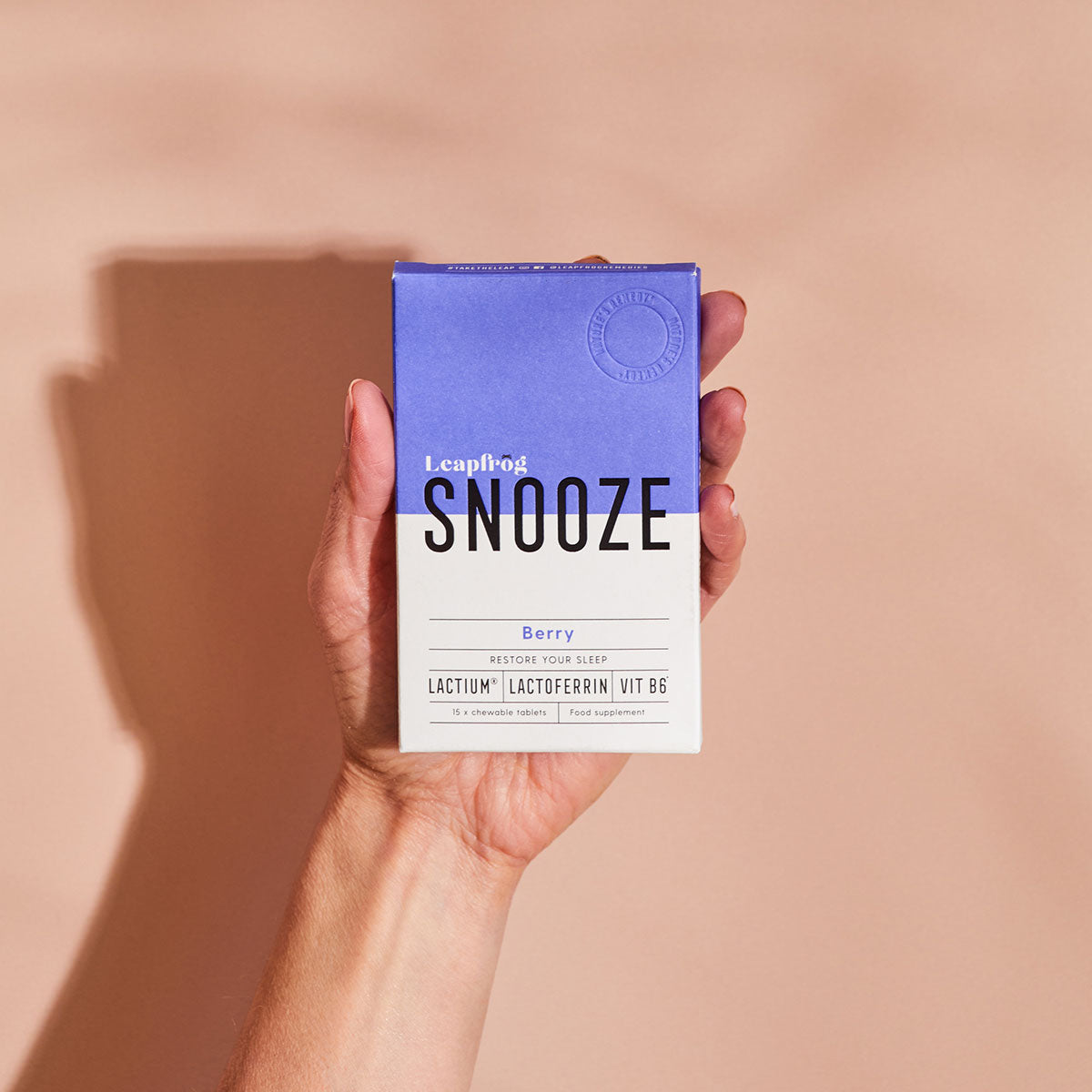
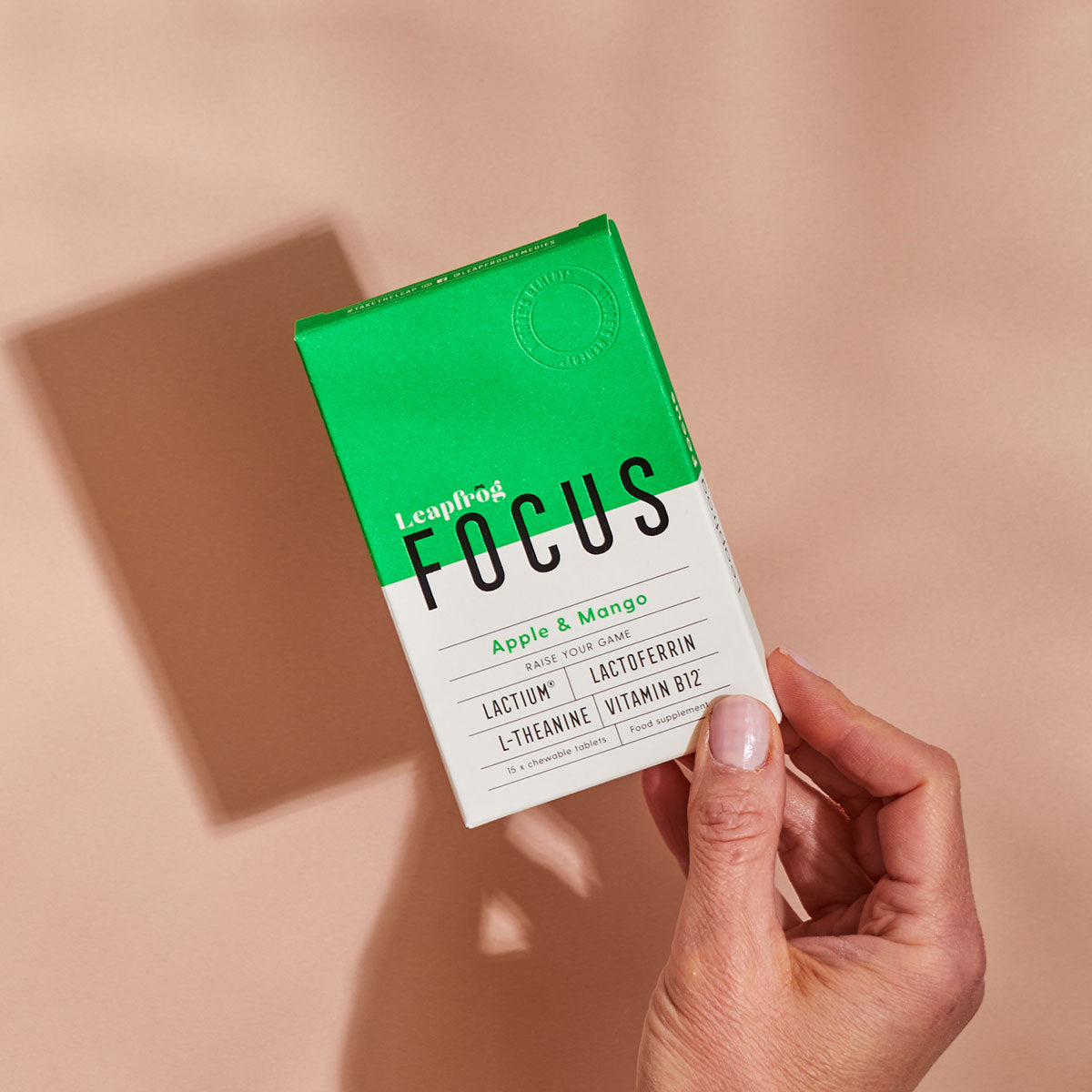
When your mind is racing and switching off feels impossible, a little extra support can go a long way. Both FOCUS and SNOOZE contain Lactium®, a milk-derived protein hydrolysate that has been studied for its calming properties and potential to help regulate the body's stress response, including cortisol levels. Whether you're trying to stay focused during a busy day or quieten a racing mind before bed, FOCUS and SNOOZE are designed to support you at different moments, helping you feel more balanced during the day and ready to unwind at night.

Reference list
American Psychological Association (2022). What’s the difference between stress and anxiety? [online] Apa.org. Available at: https://www.apa.org/topics/stress/anxiety-difference [Accessed 8 Oct. 2026].
Daviu, N., Bruchas, M.R., Moghaddam, B., Sandi, C. and Beyeler, A. (2019). Neurobiological links between stress and anxiety. Neurobiology of Stress, 11(1), p.100191. doi:10.1016/j.ynstr.2019.100191.
Legg, T. (2022). Stress and anxiety: Causes and management. [online] Healthline. Available at: https://www.healthline.com/health/stress-and-anxiety [Accessed 8 Oct. 2026].
National Institute of Mental Health (2022). I’m so stressed out! Fact sheet. [online] www.nimh.nih.gov. Available at: https://www.nimh.nih.gov/health/publications/so-stressed-out-fact-sheet [Accessed 8 Oct. 2026].